
ADHD and High Ability: Unraveling the Complex Relationship Between a Brilliant Mind and the Challenges of Attention
Explore the complex relationship between ADHD and high intelligence. Contrary to common assumptions, a high IQ doesn't prevent ADHD. Learn how symptoms can manifest differently, how intelligence might mask challenges, and why understanding this combination is vital for effective support and embracing neurodiversity.
ADHD and High Intelligence: A Combination That Challenges Our Assumptions
When we talk about ADHD (Attention Deficit Hyperactivity Disorder), the image that often comes to mind is of children with school difficulties, impulsivity, and trouble concentrating. However, the reality of the disorder is much more complex and multifaceted, and science shows us that it can manifest differently in each person.

3D medical background with male figure with brain highlighted
One of the questions that has intrigued researchers and professionals is the relationship between ADHD and high intelligence. Is it possible for people with high IQs to also have ADHD symptoms? And if so, how would this combination manifest? A recent study published in the journal Frontiers in Psychology helps us unravel this complex relationship, exploring how intelligence, impulsivity, and Attention Deficit Hyperactivity Disorder connect.
Read our article: Decisions in ADHD Treatment: How to Involve the Whole Family
Intelligence and ADHD: A Complex Debate
The scientific study aimed to explore the relationship between ADHD and IQ, analyzing data from a large group of children and adolescents. Traditionally, it was believed that ADHD was more common in people with lower IQs. However, science has revealed that this view is mistaken and that the relationship between intelligence and ADHD is much more complex.
The study results indicate that intelligence does not protect against ADHD. This means that people with high IQs can also exhibit symptoms of the disorder, including difficulties with attention, impulsivity, and hyperactivity. However, the study also revealed some important nuances in this relationship, which we will explore in the following paragraphs.
Read our article: The Complete Guide to ADHD Treatment
What the Study Revealed: Intelligence and the Different Symptoms of ADHD
The researchers analyzed responses from parents, teachers, and the young people themselves, using questionnaires and tests to assess the presence of ADHD symptoms, as well as emotional and behavioral problems. The study revealed that:
- Intelligence has an inverse relationship with attention problems: People with higher IQs tend to report fewer attention problems compared to those with lower IQs.
- Intelligence does not significantly affect perceived hyperactivity-impulsivity: Levels of hyperactivity-impulsivity did not vary significantly with intelligence, meaning people with high IQs can exhibit these symptoms just as much as people with lower IQs.
- Intelligence level influences how parents and teachers perceive the child: Parents tend to perceive more attention problems than teachers in children with high IQs, while the opposite occurs in children with lower IQs, suggesting the school environment may be less stimulating for high-intelligence children and that they express their challenges more at home.
- Attention and impulsivity affect school performance, regardless of IQ: Both inattention and impulsivity can negatively affect the school performance of people with ADHD, even those with higher IQs, but this can vary depending on parent and teacher perceptions and the level of stimulation in the child’s environment.
Read our article: ADHD and Time Perception: How Brain Stimulation Can Help
Can Intelligence Mask ADHD? An Important Consideration

One hypothesis the study investigated is whether high intelligence could “mask” ADHD symptoms, leading to misdiagnosis. The research confirmed that individuals with high intelligence may show more pronounced symptoms at home rather than at school, indicating that the school environment may not meet their needs and that poor school performance should not be the sole criterion for diagnosing the disorder.
Read our article: Unstable Brain Activity May Explain Control Struggles in Children with ADHD
However, it’s important to remember that ADHD can cause impairment even in people with high IQs, including difficulties with organization, time management, emotional regulation, and maintaining focus and attention on tasks that don’t interest them.
The Impact of Impulsivity: Decisions and Movement
The study also explored how impulsivity affects how people make decisions and move. The results indicated that:
- Impulsive individuals with ADHD have difficulty maintaining interaction with others.
- People with ADHD have difficulty making complex decisions.
- Impulsive individuals with ADHD use fewer strategies when executing movements.
- Impulsive individuals with ADHD showed a greater preference for the left side of the body.
These results demonstrate that impulsivity affects not only thoughts and emotions but also how we interact with the world and the people around us. This characteristic, when combined with ADHD, can pose challenges in social, academic, and professional life.
Read our article:
ADHD and Neurodiversity: A More Inclusive Perspective

Multiracial group of friends taking selfie in a urban street with a black man in foreground. Three young women and two men wearing casual clothes.
It’s important to emphasize that ADHD, like other neurodevelopmental disorders, is part of human diversity, and that our goal should be to understand, accept, and value the different ways of being and experiencing the world.
Attention Deficit Hyperactivity Disorder is not a defect or a limitation, but rather a different way the brain functions, which can bring challenges but also potential. People with ADHD can be extremely creative, innovative, and persistent when they find an environment that stimulates and accepts them as they are.
Read our article: Who Are People with ADHD? Debunking Stereotypes and Celebrating Diversity
Towards Understanding and Appropriate Support
The study we explored in this post helps debunk some ideas about ADHD, showing that intelligence doesn’t protect against the disorder and that people with high IQs can also face difficulties with attention, impulsivity, and hyperactivity.
It’s important that we continue investing in research to help us better understand ADHD and develop more effective therapeutic approaches that consider the complexity of the disorder and the needs of each individual. Remember: you are not alone on this journey. Self-awareness and professional support are your greatest allies in building a full and meaningful life.
Learn more
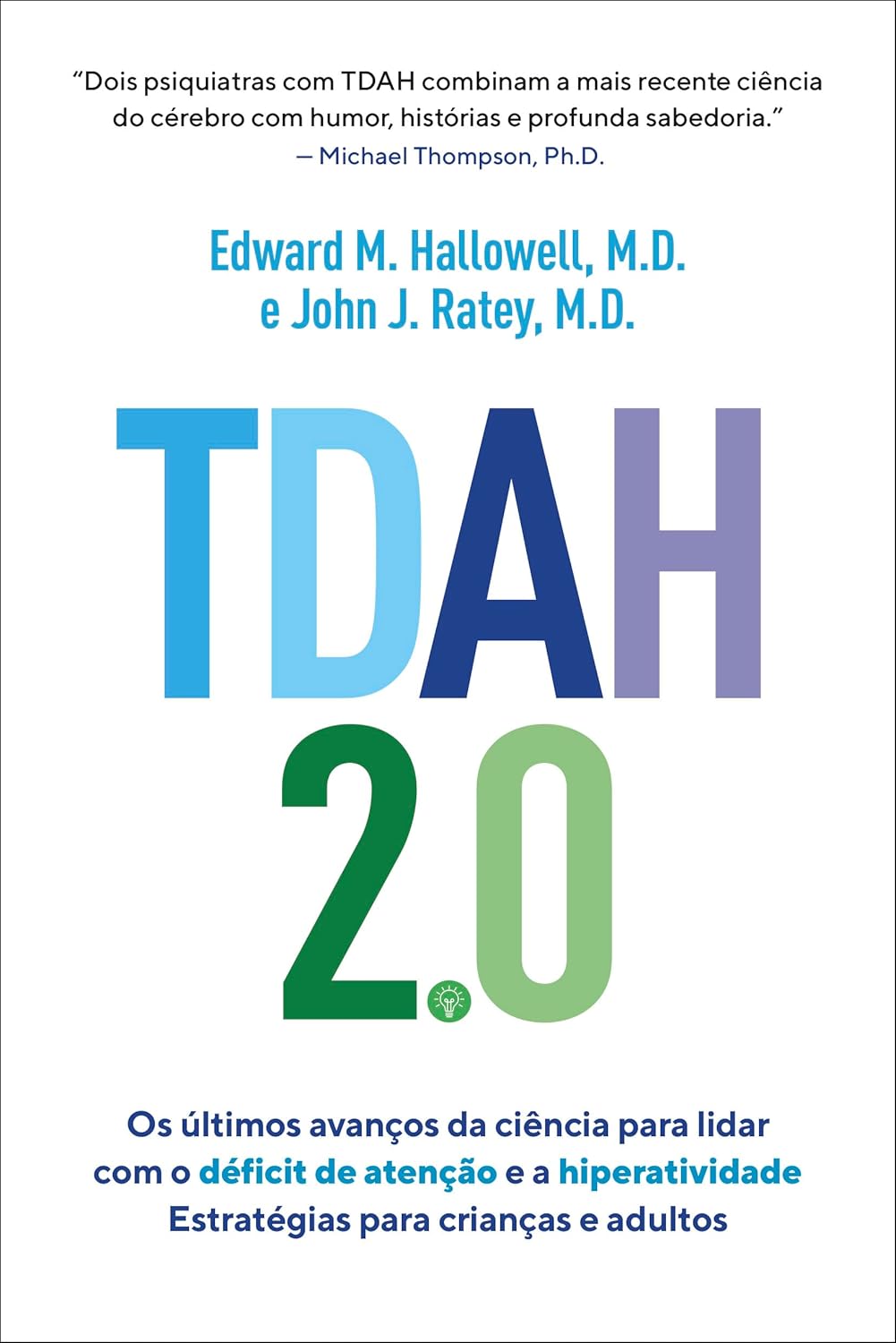
Cover
Get ready to:
- Embrace your unique tendencies: Learn how to take advantage of the benefits your brain offers, instead of fighting against it!
- Find your ideal challenge: Practical tests to discover activities that will help you shine!
- Master procrastination: Discover the power of physical exercise and meditation to boost your focus and relaxation.
- Strengthen your connections: Learn how emotional bonds can increase your self-esteem and help you overcome stigma.
TDAH 2.0 is an inspiring and practical guide to minimize negative traits and unlock your maximum potential at any stage of life.
Whether ADHD is an advantage or a curse, the choice is yours! ✨
Find out how to turn your ADHD into a superpower with ADHD 2.0!
FAQ: ADHD and High Intelligence
References
Learn more
Author: Nanda Rommelse
Original Research: Open Access
“High intelligence and the risk of ADHD and other psychopathology“ Nanda Rommelse et al. The British Journal of Psychiatry


It was from this passion that TDAH.World was born – a space created to inform, support, and connect people with ADHD. My goal is to translate complex information into accessible content, without losing scientific depth, so that more people can better understand and deal with the challenges – and also the potential – of ADHD.
I believe that well-applied knowledge can transform lives, and that’s what motivates me to keep studying, writing, and sharing insights on neuroscience, mental health, and cognitive performance. If you’ve made it this far, I hope you find something here that makes sense to you!